RTP vs Volatility Explained With Worked Examples
RTP and volatility are two different numbers. This guide explains what each one means, how they work together, and what neither of them can tell you about one session.
By CasinoRadius team, updated 30 October 2026, 6 min read
Last checked: 29 October 2026
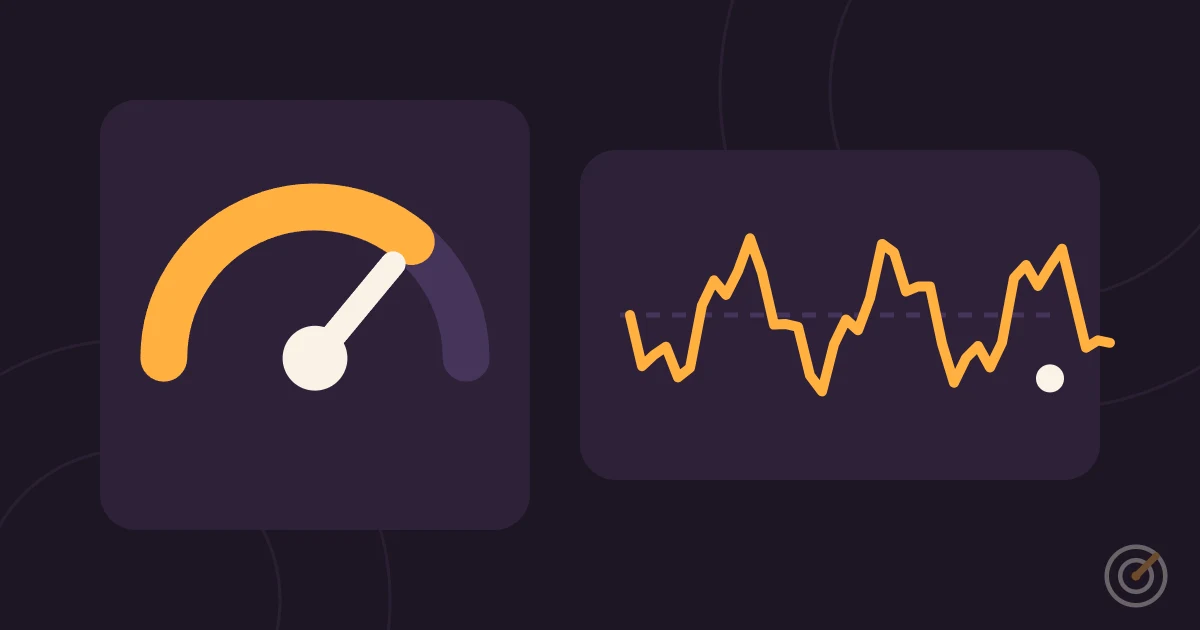
You will see two numbers on many slot pages: RTP and volatility. They sound alike, but they answer different questions. This guide explains both in plain words, with simple sums you can check yourself.
What RTP means
RTP stands for return to player. It is the share of staked money that a game is designed to pay back over time. eCOGRA, an industry testing agency, describes it as the percentage of wagered money that a game will pay back to players over time.
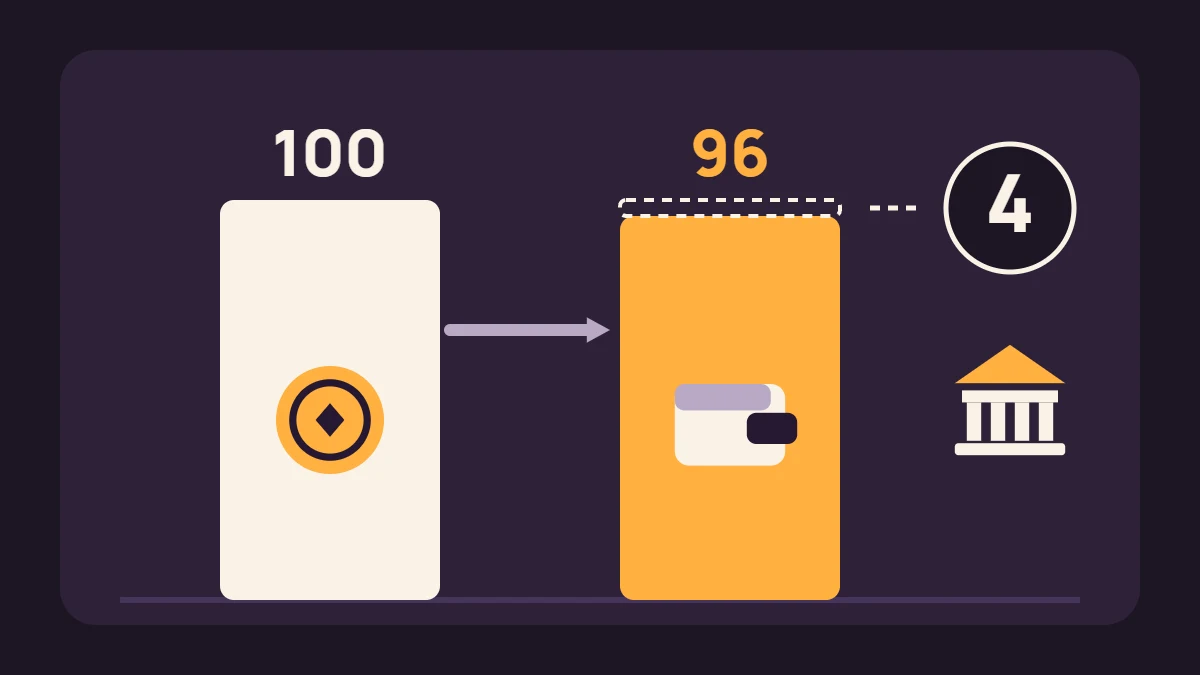
An RTP of 96 percent means this: over a very long run, the game returns an average of 96 units for every 100 units staked. The other 4 units are the house edge. RTP and house edge add up to 100.
- RTP 96 percent: house edge 4 percent.
- RTP 94 percent: house edge 6 percent.
The important words are "very long run". eCOGRA says RTP is an average achieved over a significant number of plays, and not each time the game is played. The same page says a player's own result can differ a lot on a small number of plays, and usually moves towards the stated figure only over millions of spins.
A worked RTP example
Say you stake 1 unit per spin on a game with 96 percent RTP.
- After 100 spins you have staked 100 units.
- The average return is 96 units (100 x 0.96 = 96).
- The average loss is 4 units.
Now scale it up. After 1,000 spins you have staked 1,000 units. The average return is 960 and the average loss is 40.
This is an average over many players or many spins. It is not a forecast for you. In one short session you can lose everything, or you can get back far more than you staked. Wikipedia makes the same point: almost any outcome is possible in the short term.
What volatility means
Volatility (also called variance) describes how the returns are spread out. It is about the pattern of wins, not the average.
The UK Gambling Commission notes that volatility is most commonly measured with the standard deviation of the game. Its guidance describes highly volatile games as having very large but rare prizes. Low volatility games are more predictable and mostly pay small, frequent prizes.
- Low volatility: small wins come often. Your balance moves up and down gently.
- High volatility: wins come rarely, but some can be large. Long dry spells are normal.
Same RTP, different feel
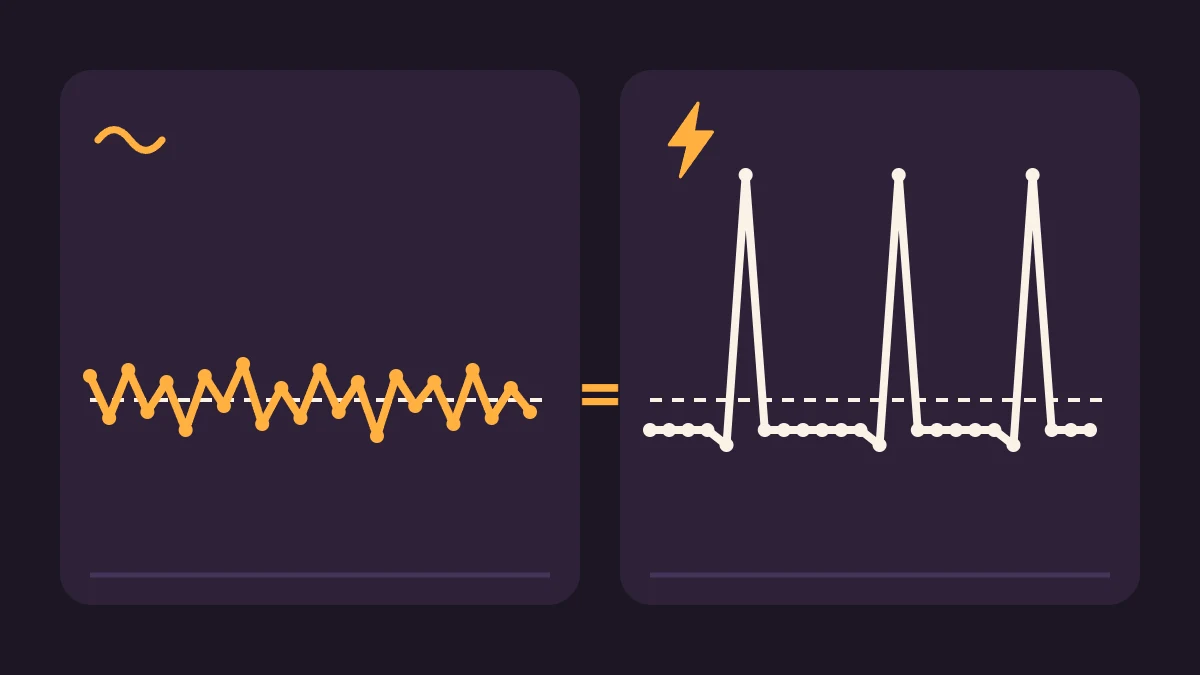
Here is a simple model with two games. Both have 96 percent RTP. You stake 1 unit on each of 100 spins.
- Game A (lower volatility): it pays 3 units on 32 of the 100 spins. 32 x 3 = 96 units returned.
- Game B (higher volatility): it pays 96 units on 1 of the 100 spins. 1 x 96 = 96 units returned.
Both return 96 on 100 staked, on average. But the experience is not the same. If Game B hits its big prize on exactly 1 spin in 100 (a 1 percent chance per spin), then the chance of seeing no prize at all in 100 spins is 0.99 multiplied by itself 100 times. That is about 0.37, or roughly 37 in 100 sessions of that length. In the other sessions you see one or more hits, and some of them are large.
The numbers in this model are made up to show the idea. Real games have many different prize sizes. But the lesson is real: RTP tells you the long-run average, and volatility tells you how bumpy the road is.
How to read RTP on a game page
- Look in the game's rules or info page. The UK Gambling Commission and eCOGRA both say the designed (theoretical) RTP is the figure shown to players in the player-facing rules.
- Read the exact number. 96.5 percent and 94 percent are not the same, and the gap grows with every spin.
- Do not trust a figure copied from a review or list without checking the game itself. Some industry sources say the same title can be offered with different RTP settings. We could not confirm how common this is with a regulator, so treat it as a reason to check the figure in the game you actually open.
- Note that eCOGRA says different games in one category can have different RTPs, for example a game with more pay lines or bonus features can differ from a basic one.
- Volatility is often not stated as a number. Some pages use words such as "low", "medium" or "high". There is no single standard scale, so one site's "high" may not match another's.
What RTP does not tell you
- It does not tell you what you will get in a session of 50 or 500 spins.
- It does not mean a game is "due" a win after a losing run. Each spin is independent.
- It does not say how often you will win, or how big wins will be. That is volatility.
- It is not a promise, a strategy or a way to make money. Every RTP below 100 percent means the game keeps a share of all stakes.
In short
- RTP is a long-run average: 96 percent means about 96 returned per 100 staked.
- Volatility is the spread: high means rare big wins, low means frequent small wins.
- Two games can share one RTP and feel very different.
- Neither number can predict your next session.
- Read the RTP in the game's own rules before you play.
Play with care
Gambling is for adults aged 18 and over. It is entertainment, not a way to earn money, and it can be addictive. Set a deposit limit and a time limit before you start, and stop when you reach them. If gambling stops being fun, talk to someone you trust. Organisations such as GambleAware offer free, confidential help (GambleAware serves people in Great Britain, so look for a service in your own country). Gambling rules and what is allowed differ by country. Check the law where you live before you play.