Withdrawal Not Paid: What to Do Step by Step
If an online casino has not paid your withdrawal, these steps can help you stay organised, escalate a complaint and avoid recovery scams. No outcome is promised.
By CasinoRadius team, updated 30 October 2026, 6 min read
Last checked: 29 October 2026
A late withdrawal is stressful, but it is not always a sign of fraud. This guide gives a calm order of steps. It is general information, not legal advice, and it cannot promise any result.
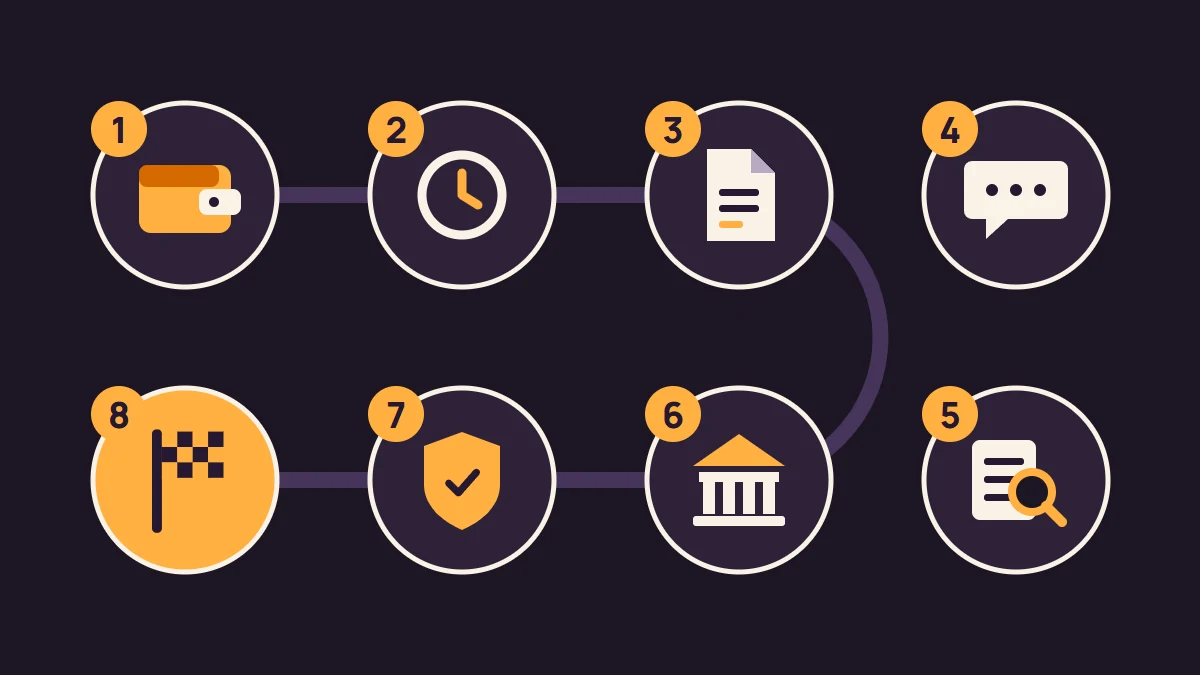
The steps
Step 1: Stay calm and stop depositing
Do not deposit more to "unlock" a payout. Do not play to win the money back. Pressure to pay more is a common warning sign. The FTC lists pressure to act at once and unusual payment demands among scam signs.
Write down the date, the amount, the method and the withdrawal reference.
Step 2: Check pending times and terms
Many casinos hold a withdrawal in a "pending" state for a set time before they process it. Open the terms and find:
- the stated pending period and processing time
- withdrawal limits per day, week or month
- any bonus rule that blocks cashing out, such as unmet wagering (see how to read wagering requirements)
- the payment method rule, since many casinos pay back to the method you used to deposit
Compare your request with these. Sometimes the delay is explained there. Sometimes it is not, and then you have a clear point to raise.
Step 3: Complete identity checks
Most casinos need to verify who you are before paying. Check your account for open requests, including your email spam folder. Send clear, valid documents that match your account name. Ask support to confirm in writing that your verification is complete. If you gave false details, expect trouble, so correct anything wrong.
Step 4: Contact support in writing
Use live chat or email, and prefer email, so there is a record. Be short and factual:
- Your username and the withdrawal reference
- The date, amount and method
- What the terms say about timing
- What you ask for, and a sensible date to reply
Keep copies of every message. Save chat transcripts and take screenshots of the account page that shows the withdrawal status.
Step 5: Escalate to the complaints department
If support does not solve it, find the casino's formal complaints process in its terms. Send a complaint to the named complaints address. Say that you will take the matter to an independent body if it stays unresolved. Note the reply time the casino states. Do not invent deadlines.
Step 6: Licensing authority or ADR
Complain to the casino first. After that, see who can review it.
- Licensing authority. Check on the regulator's site what it handles. For example, the UK Gambling Commission says it does not resolve or decide complaints about gambling-related transactions, and points people to the business's complaints process and then to an ADR provider.
- ADR body. An alternative dispute resolution service looks at a dispute between a player and an operator. IBAS, for example, gives impartial adjudications when a gambler and a licensed operator cannot agree, and operators registered with it agree to be bound by its decisions up to a total of £10,000. It only helps if the casino is registered with it. Check the casino's terms to see which ADR body, if any, it names.
Many offshore operators are not bound by your local regulator, and may have no ADR at all. In that case your options are fewer.
Step 7: Independent mediation and public records
Independent complaint and mediation sites may contact the casino for you. Their power is limited. They can add public pressure and a public record, but they cannot force a payment. Use only services you checked, and never pay a fee up front.
Step 8: Consumer protection and your payment provider
If you are in the EU, Norway or Iceland and the casino is based in another European country, the European Consumer Centres Network offers free advice on cross-border consumer problems, including redress options. Gambling may be excluded or treated differently by some consumer rules, so ask what applies.
You can also contact your bank or card provider. Card payments may have a dispute route, and it depends on the provider, the country and the facts. It may be too late if you wait. Crypto payments are generally not reversible, according to the FTC. If you paid in crypto, tell the exchange you used, and report fraud to the authority in your country if you suspect it.
Beware of recovery scams
After a loss, strangers may offer to "recover" your money. Be very careful.
- Anyone who asks for a fee before they do anything is a red flag.
- Anyone who contacts you first, by message or social media, should not be trusted.
- Never give your wallet recovery phrase or remote access to your device.
- The FTC notes that honest organisations will not ask for your personal information by unexpected call, email or text, and that anyone demanding crypto payment is a warning sign.
If you were scammed, report it to your local police or fraud service. In the US, that is ReportFraud.ftc.gov.
Be realistic
Some cases are solved, some are not. A casino may have a real reason, such as a terms breach, a failed ID check or a bonus rule. It may also simply not pay. Results depend on the operator, the evidence and where it is based. Nobody can guarantee an outcome.
Protect yourself from here
- Stop depositing at that casino.
- Set deposit and loss limits elsewhere, or use self-exclusion tools or blocking software.
- Before your next deposit, read how to check if a casino is safe.
- Keep your balance low and withdraw wins promptly.
In short
- Stop and record the facts.
- Check terms and finish ID checks.
- Write to support, then to complaints.
- Use ADR or the regulator if available.
- Collect proof and use your payment provider where relevant.
- Never pay a "recovery" fee.
Play with care
Gambling is for adults only (18+, or higher where your country says so). Never gamble money you need. If gambling is causing you stress, free and confidential help exists, for example GamCare and GambleAware in Great Britain, and local services elsewhere. Rules differ by country, so check the law where you live.